








Historisches Museum der Pfalz Speyer Historisches Museum der Pfalz Speyer
  Change contrast English Choose language
normal font size large font size huge font size Change contrast

Urgeschichte (Prehistory)

In the beginning, there was fire.

The prehistory of the Palatinate lasted 700,000 years: from the first humans who settled here until the arrival of the Romans. Prehistory and early history, also known as ancient history, concerns itself with unwritten history. Such fascinating but unrecorded events as the mastery of fire, the puzzling disappearance of the Neanderthals, and the fabrication of metal occurred during prehistory. Early man evolved from fur-clad hunters with biface tools and weapons to sedentary farmers who molded vessels out of clay, wove clothing out of wool, and cultivated grain.

Neandertals und Homo sapiens

Neandertals

For several thousand years, the early human Neanderthals and modern humans lived simultaneously. Whether they lived together and exchanged knowledge or if they saw each other as enemies is something researchers still disagree on. But about 27,000 years ago, only modern man, Homo sapiens was left.  The Neanderthal had gradually disappeared. In the Museum, we meet them again. Neanderthal and Homo sapiens sit peacefully side-by-side and swap thoughts

History you can touch

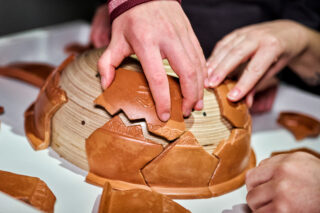
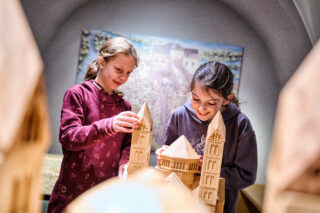
These two ancient beings are, like the Longhouse, projects of the Youth Museum. Through the juxtaposition of the past, we make history current. In the walk-in longhouse built in mud brick (adobe) style, visitors can try out Stone Age appliances like a roll-stone or a stone drill. The personal experience leaves a long-lasting impression.

Royal Living: The Golden Hat

The Golden Hat

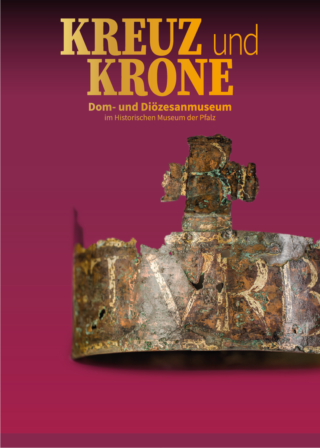
The focal point of the permanent exhibition lies in the origin, ascent and decline of Celtic culture. Fifteen hundred years before Christ, they lived in a hierarchical society with a powerful leader or prince in charge. The highlight of this collection is the golden hat of Schifferstadt. This tapered hat of gold-plated sheet metal is one of only four known examples worldwide. It is believed to be the ceremonial crown of a priest with supra-regional authority. 

The Bronze Wheel

Additional highlights of the exhibition are provided by the two bronze wheels from Hassloch, dating from the 9th century BC. The wheels belonged initially to a 4-wheeled ceremonial cart. The remaining parts of the demolished cart were found in several places underground. Only a few parts have been salvaged to date. From their remains (103 pieces), the wheels were reassembled. The bronze wheels from Hassloch reflect not only the splendor of the Celtic powers that be but also suggest the highest level of skill for their prehistoric bronze foundrymen.


Picture Gallery

Urgeschichte
(Number of pictures: 8)

Langhaus_Eingang.jpg

Virtual Tour

Ausstellung Urgeschichte
Start our
Virtual Tour

Bookmark

Mr.Wong Webnews Folkd Yigg Digg
del.icio.us Reddit Yahoo Google