









Historisches Museum der Pfalz Speyer Historisches Museum der Pfalz Speyer
  Change contrast English Choose language
normal font size large font size huge font size Change contrast

Domschatz (Cathedral Treasure)

Opend Graves

A dissatisfied visitor wrote in 1900:

“The fame of the Speyer Cathedral, one of the mightiest architectural monuments of the early Middle Ages in all of Germany, has always derived from the fact that it harbored the graves of German emperors. Whoever entered the Cathedral in order to visit these resting places that had been rendered sacred by history because they contained the remains of probably the most outstanding rulers that ever graced the German emperor’s throne, had to feel disappointed in a certain sense. Because in the so-called King’s Choir in front of the high altar, one could only be shown the floor under which the emperors were supposed to be resting. There was nothing to be seen of the original graves, sarcophagi, and burial plots.”

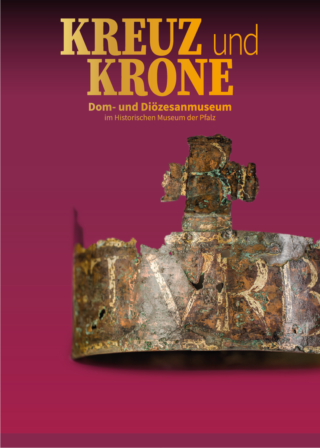
This is why in 1900, the crypts were investigated, the graves opened and the relationships checked. The rulers were reburied, once their identities had been verified. The precious burial objects have since then stood in the center of our “Cathedral Treasure” exhibition in the Historical Museum of the Palatinate. The burial crowns of the Salian emperors, Henry III’s orb, the gold ring of Henry IV, inscribed tablets and valuable textile fragments bear unique witness to the Salian dynasty.

The textiles and the photographs taken of the open graves are now being restored and conserved with the latest, innovative techniques, as part of the so-called KUR-Project in the Historical Museum of the Palatinate. More...

The Cathedral

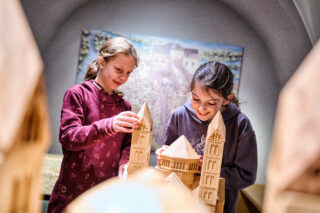
The nearly 1,000-year-long architectural history of the Cathedral is like a three dimensional history book. Wars, money shortages, tastes and representational zeal have influenced it. The origin, alteration and adaptation of the Cathedral has been reproduced through models, architectural fragments, as well as multimedia recreations. A computerized reconstruction brings the early Romanesque shape of the Cathedral before one’s eyes; touch-screens clarify the reconstruction of the Cathedral in the Nazarene style in the 19th century. The reconstruction can not only be experienced virtually; three of the huge frescoes painted by John Baptist Schraudolph were taken down during the great restoration of the Cathedral in the middle of the 20th century and can now be seen in the Historical Museum of the Palatinate. 

Treasure Chamber

The most valuable exhibits of the Cathedral treasure are used for church services. Precious liturgical devices, along with valuable hangings, paintings and sculptures from the 7th to the 20th centuries reveal the piety of their patrons and the high artistry of their creators. The Historical Museum received the objects in the Treasure Chamber on loan for safekeeping. They are still in possession of the Bishopric and are requested back periodically for use in religious services.


Royal Murders

Rulers live dangerous lives. 800 and 700 years ago respectively, King Philipp I of Swabia and King Albrecht I of Austria met violent deaths. Both are buried in the Speyer Cathedral. With the help of their burial objects, a special exhibit explains the backgrounds and circumstances of their royal murders. More …

The Ulfilas page

Using ink of pure silver, Bishop Ulfilas transferred the Bible into the Gothic language in 500 AD. The last page of the Codex Argenteus came into the Cathedral Treasure collection in 2007. More …

Picture Gallery

Domschatz
(Number of pictures: 8)

08.jpg

Project for the exhibition

Bookmark

Mr.Wong Webnews Folkd Yigg Digg
del.icio.us Reddit Yahoo Google